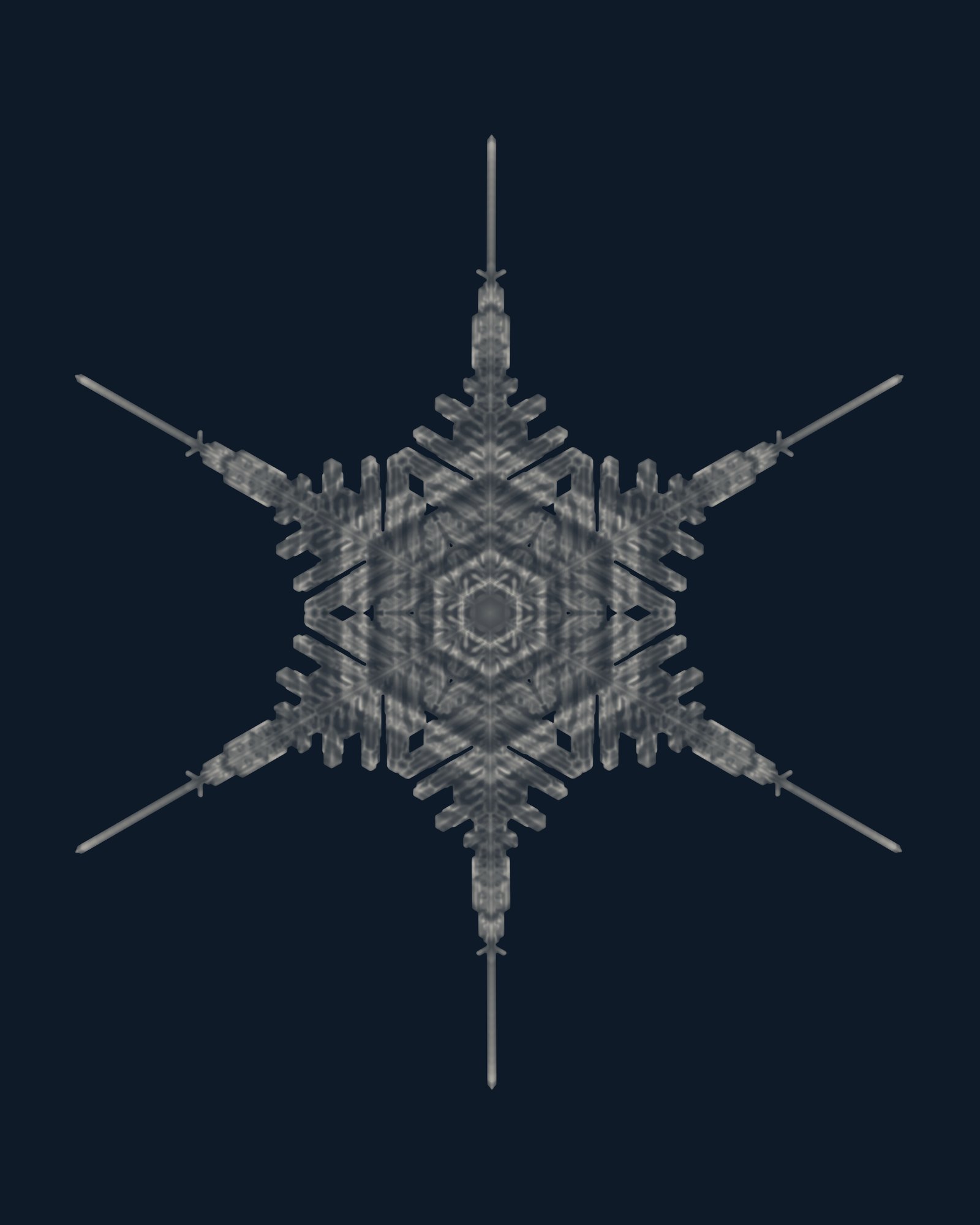
New York, 4 January 2018, noon in a blizzard. Four kilometres up, the cloud was at minus fifteen, the cold where ice branches most freely, and a crystal there would open six long, feathered arms.
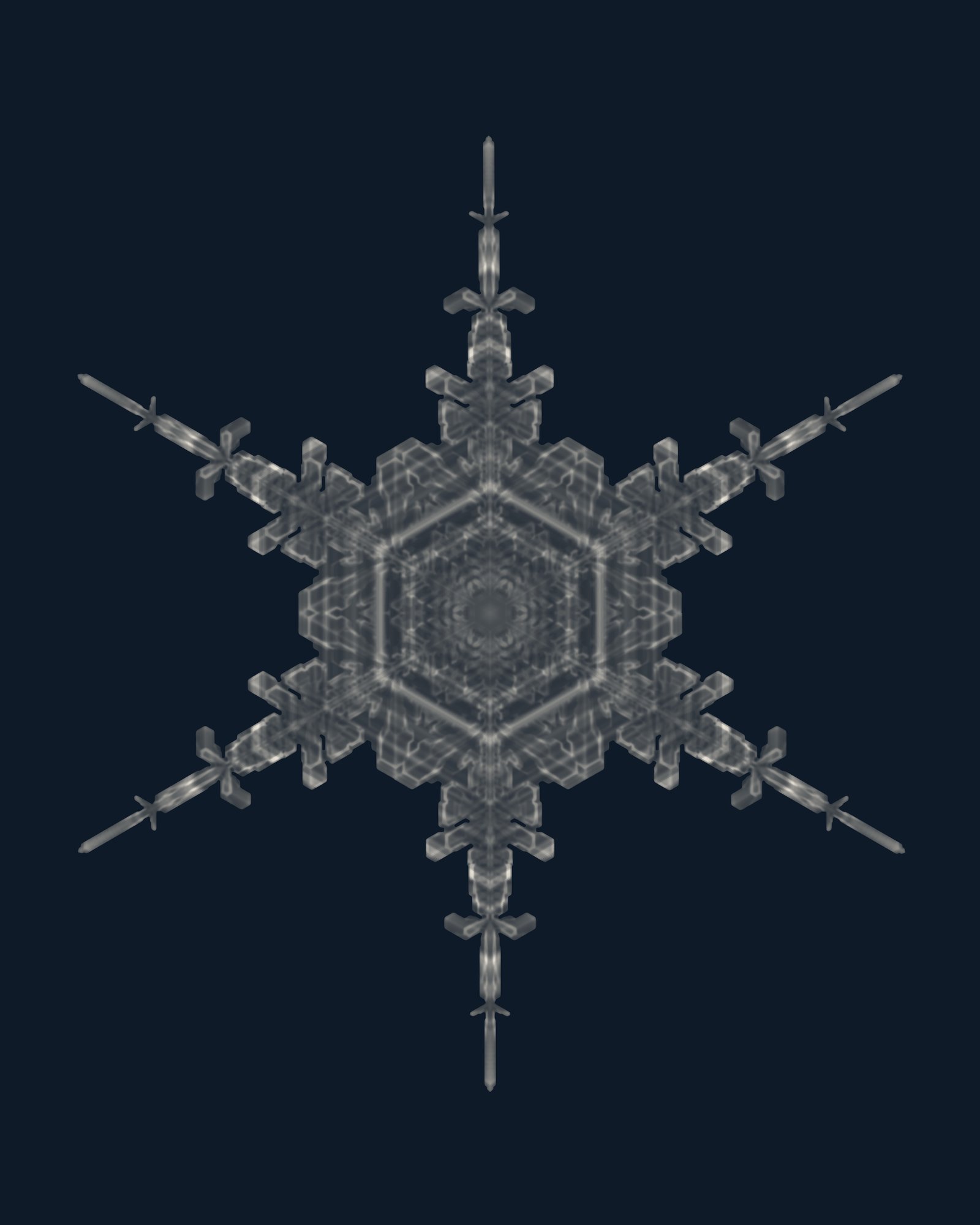
A December noon in Paris, just above freezing at street level and minus 10 to minus 23 in the cloud. The flake that day's air would grow branches in the cold heights, then flattens its tips into small plates as it sinks toward thawing air.
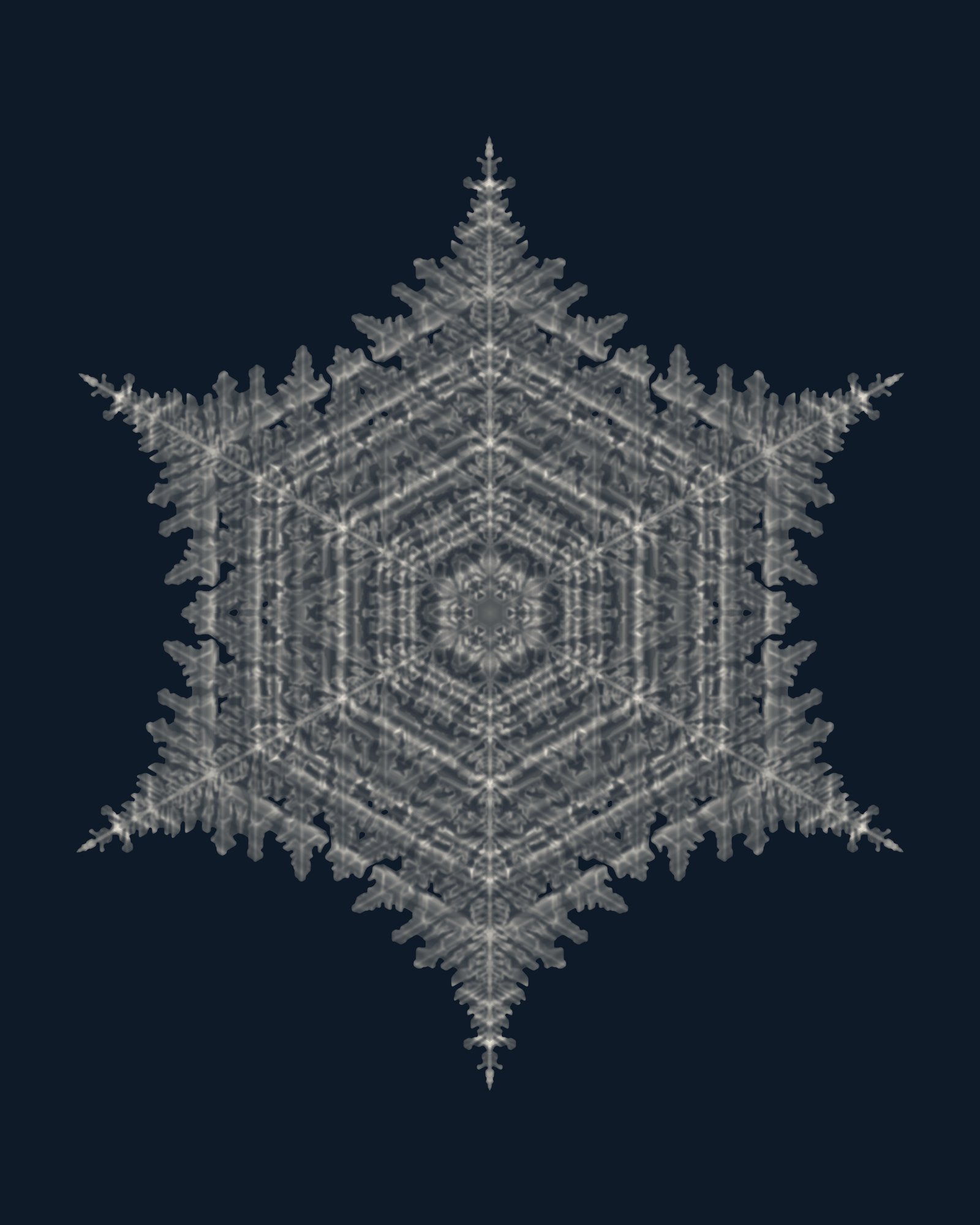
Oslo, 17 January 2024, minus eight under deep, damp cloud. Near minus fifteen again, with moisture to spare, the arms grew branches on their branches until the gaps between them nearly closed.
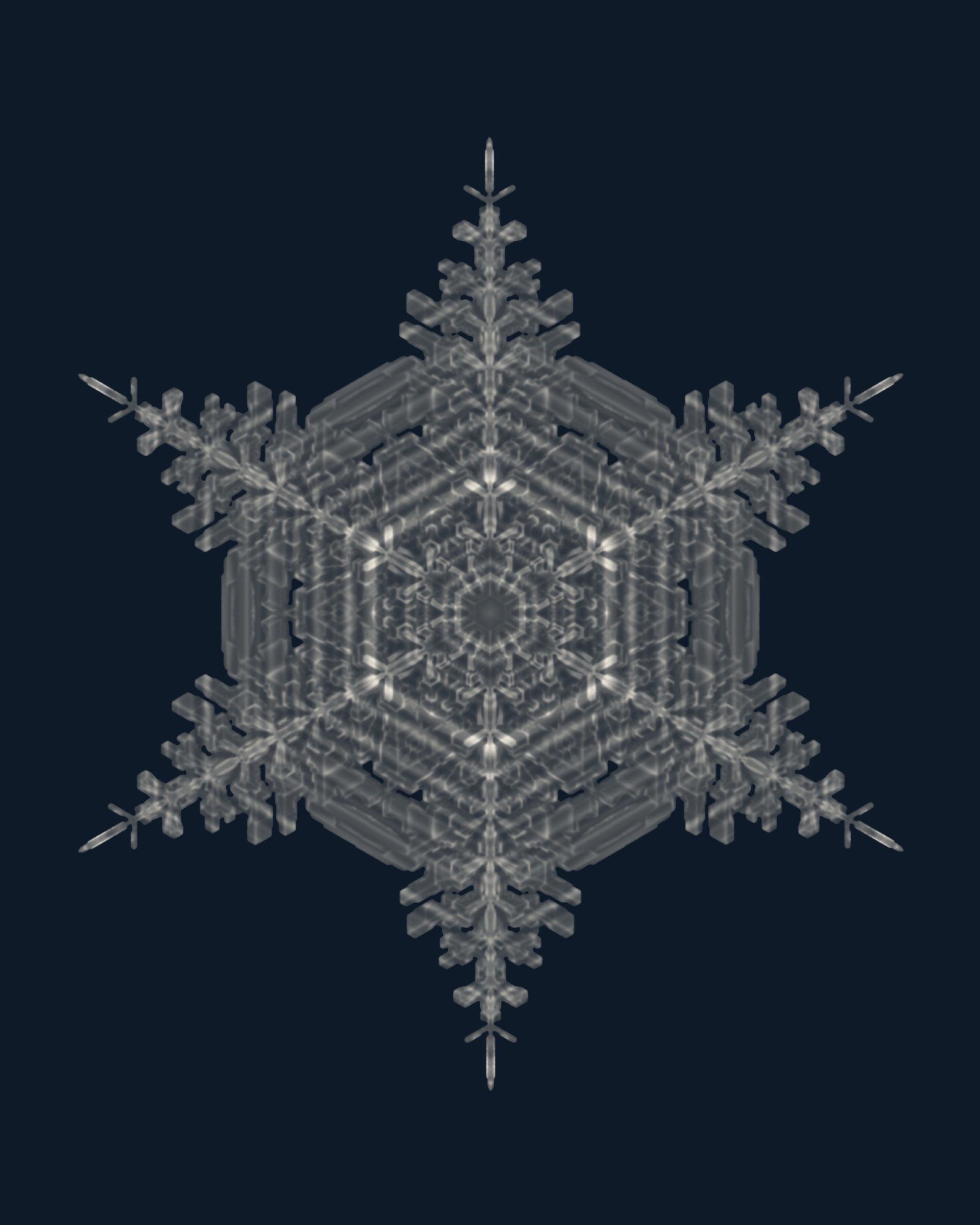
Sapporo, 25 January 2023, was the coldest of these days, with the cloud beginning at minus twenty-six. Ice that cold tends to grow flat, so this one became a plate of six ridged sectors.
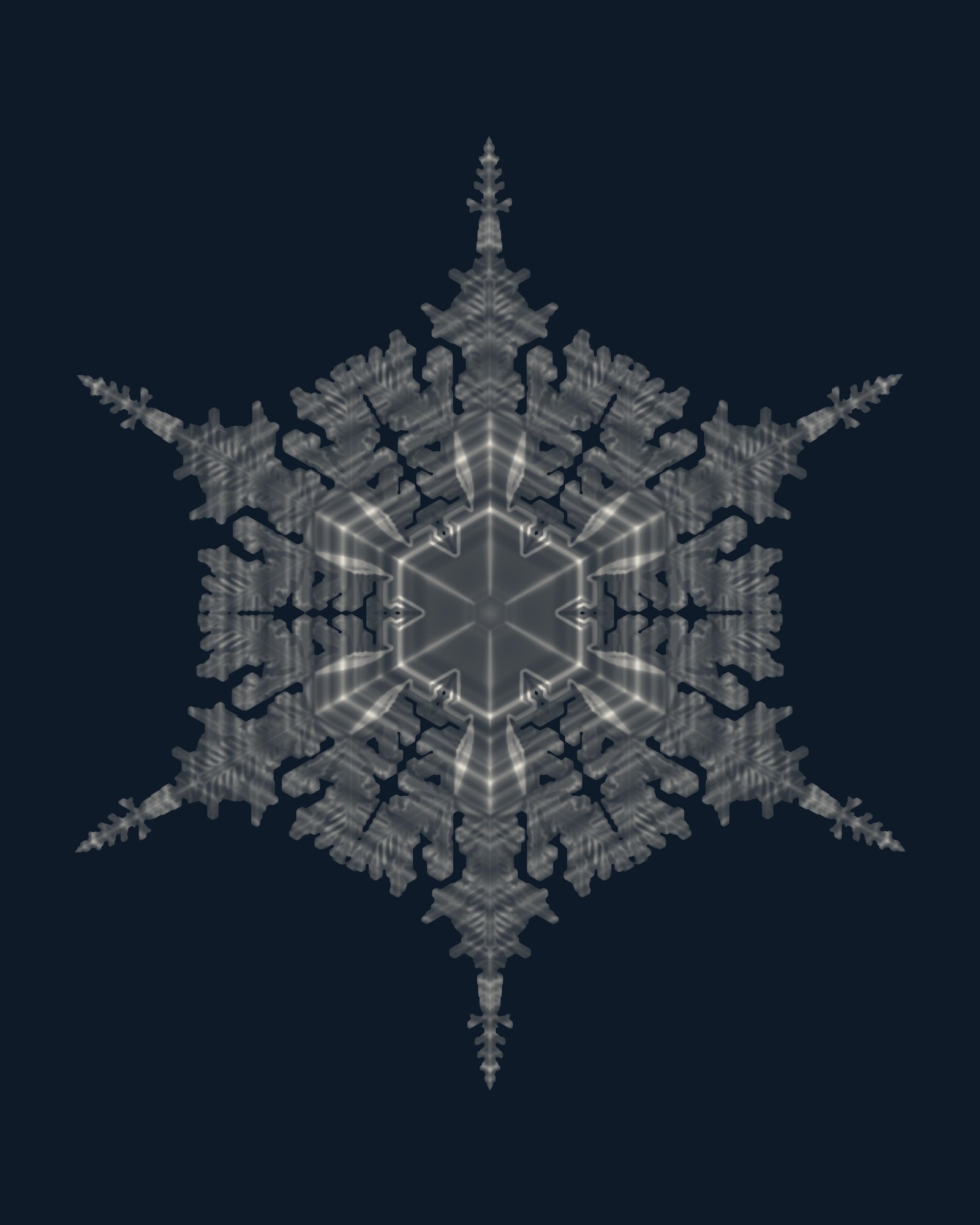
Some days stay without a name. Every snow crystal begins as a tiny six-sided prism, and this one still keeps its first small plate at the centre.