Wherever snow fell, on every day it fell, the air made shapes that almost no one saw. Each flake here grows from the weather of one place and one hour.
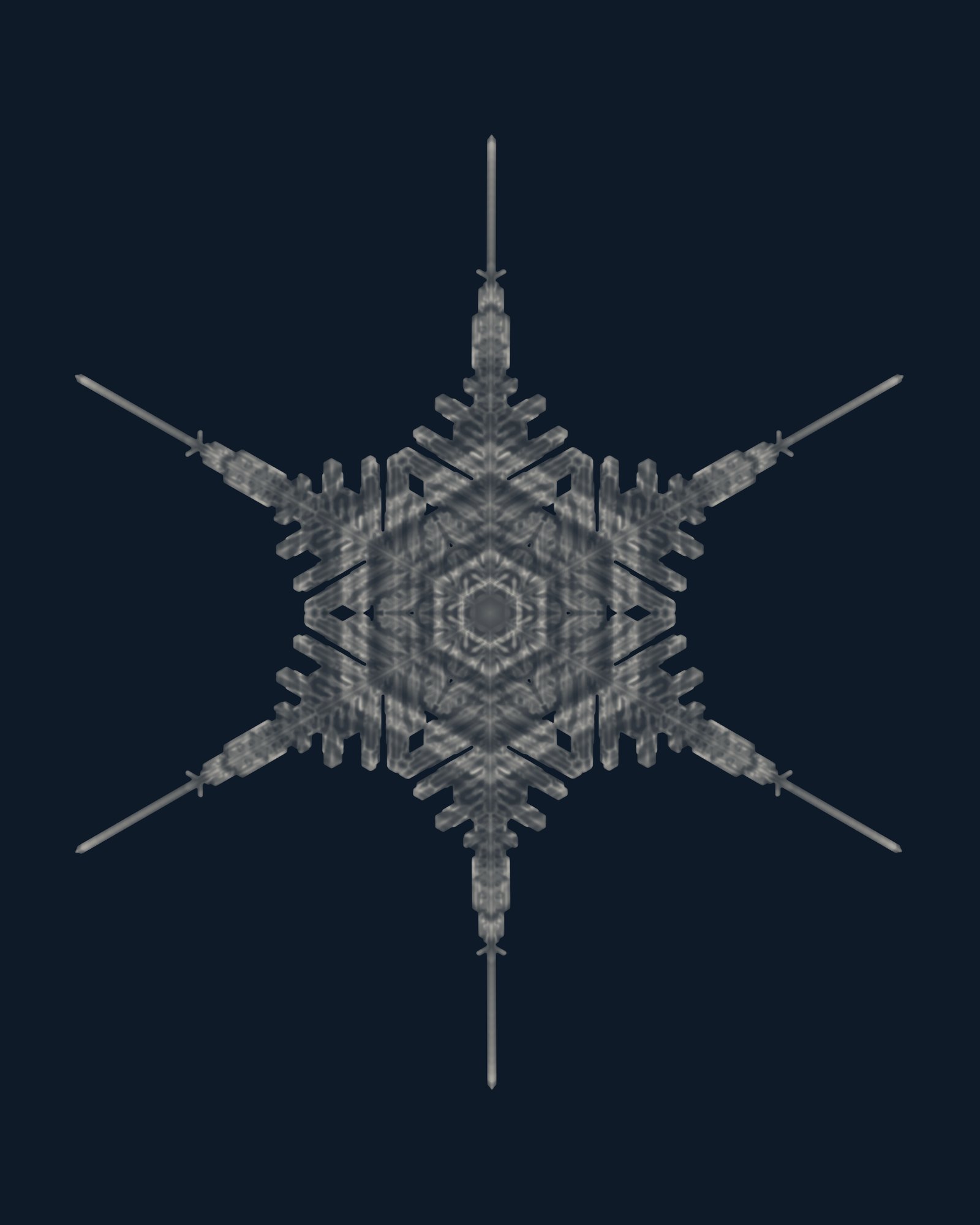
New York, 4 January 2018, noon in a blizzard. Four kilometres up, the cloud was at minus fifteen, the cold where ice branches most freely, and a crystal there would open six long, feathered arms.
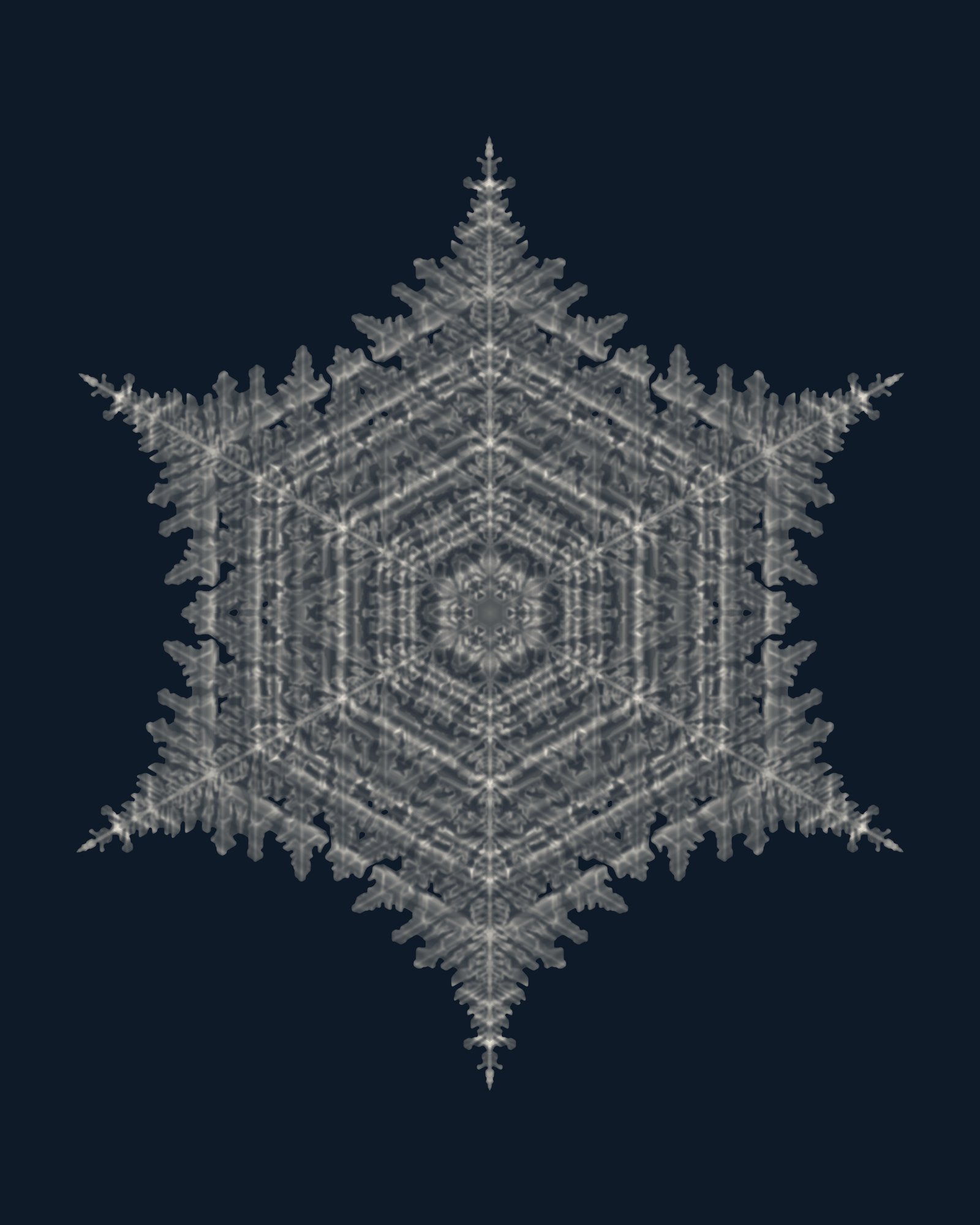
Oslo, 17 January 2024, minus eight under deep, damp cloud. Near minus fifteen again, with moisture to spare, the arms grew branches on their branches until the gaps between them nearly closed.
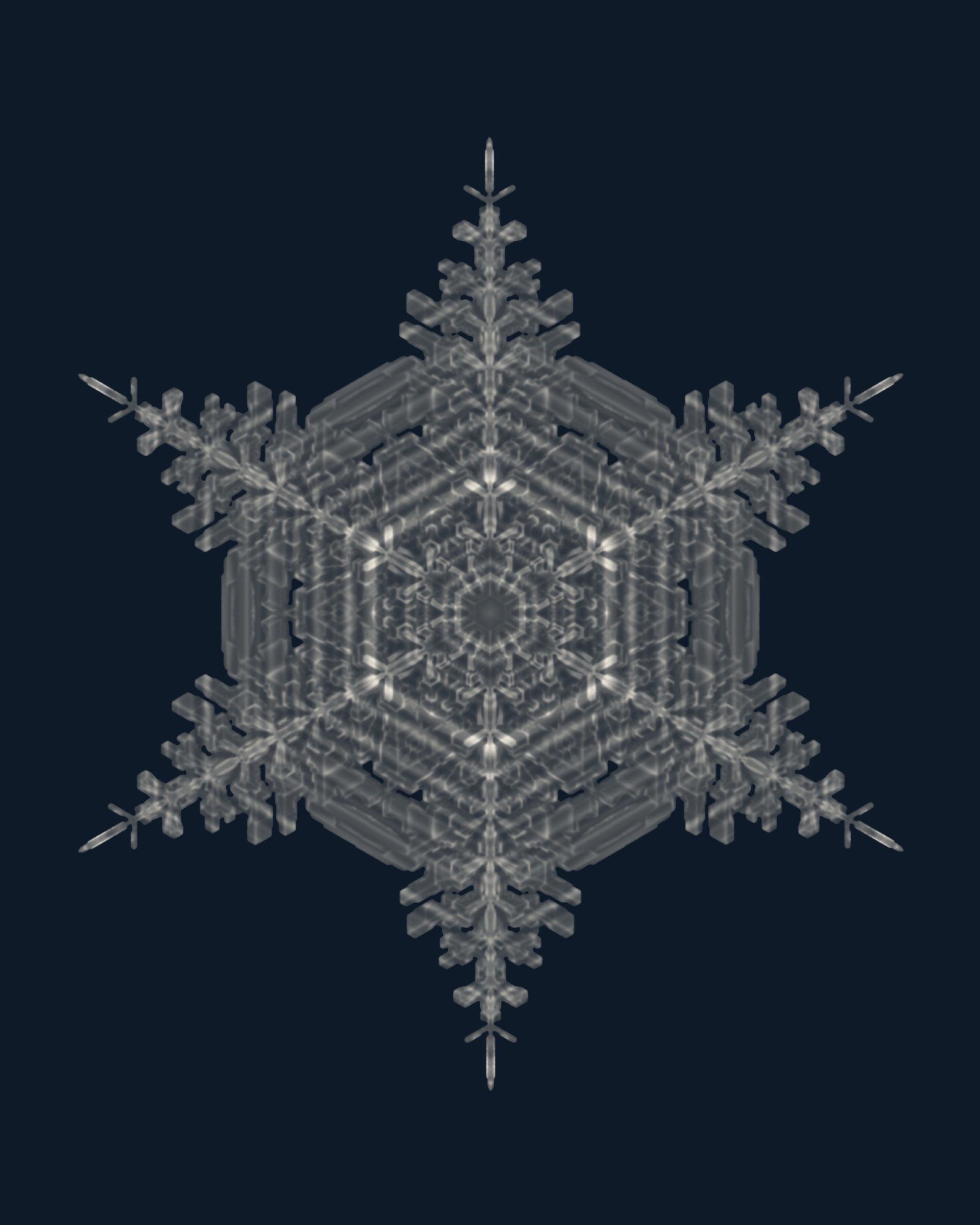
Sapporo, 25 January 2023, was the coldest of these days, with the cloud beginning at minus twenty-six. Ice that cold tends to grow flat, so this one became a plate of six ridged sectors.
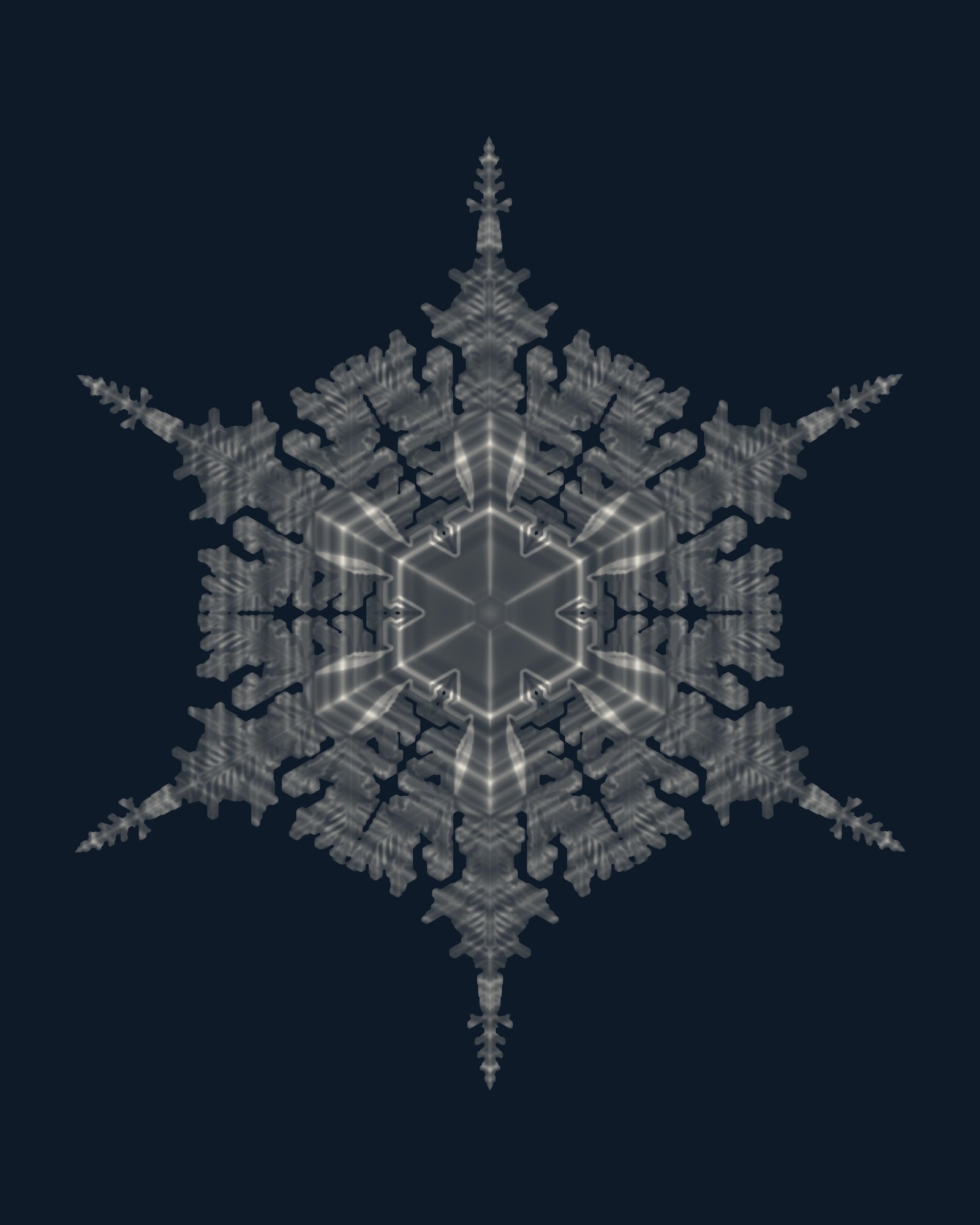
Some days stay without a name. Every snow crystal begins as a tiny six-sided prism, and this one still keeps its first small plate at the centre.
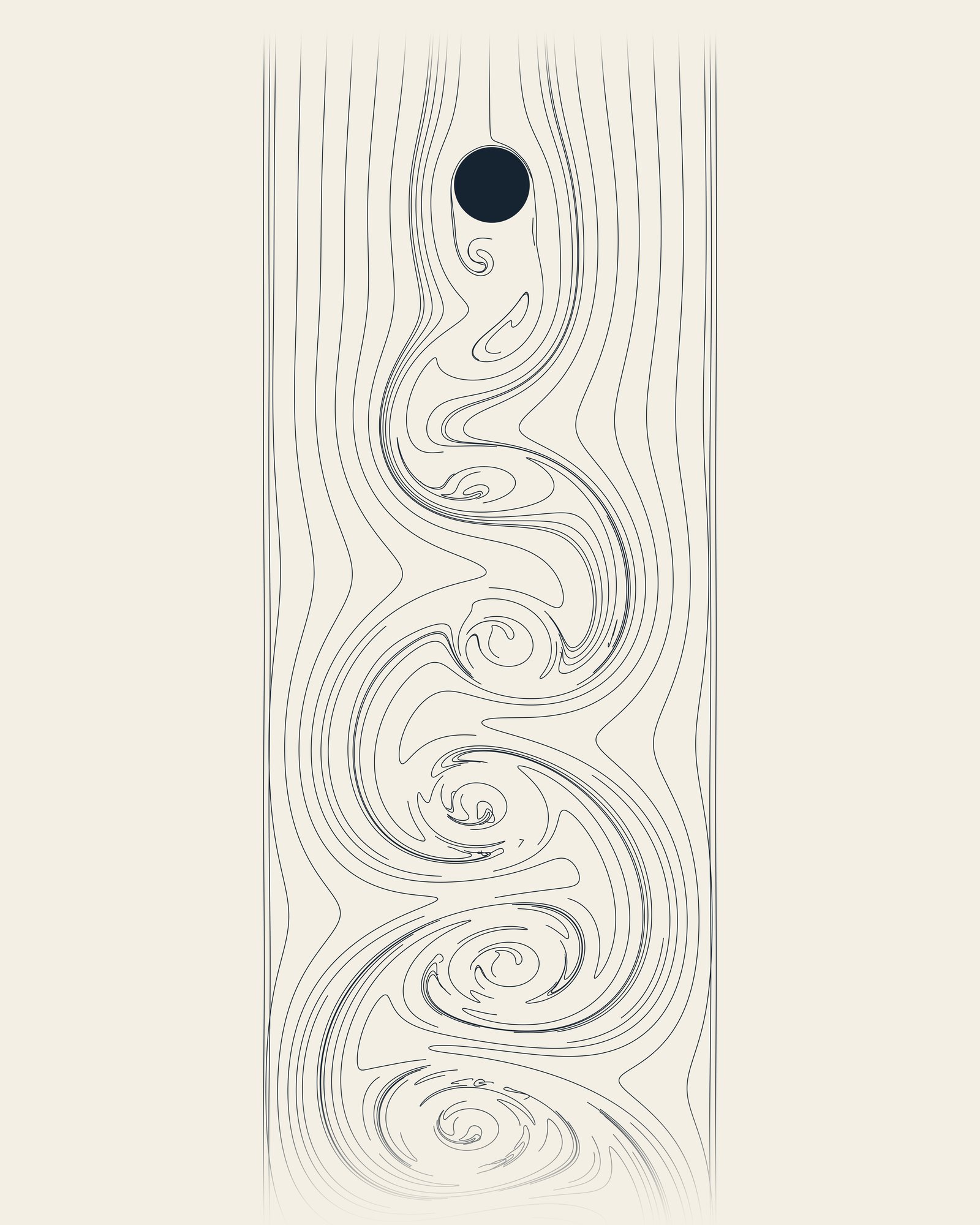
Water is just as exact. Past a Reynolds number near 47, the wake behind a lone cylinder cannot stay still, and eddies let go from one side, then the other, in a von Kármán street.
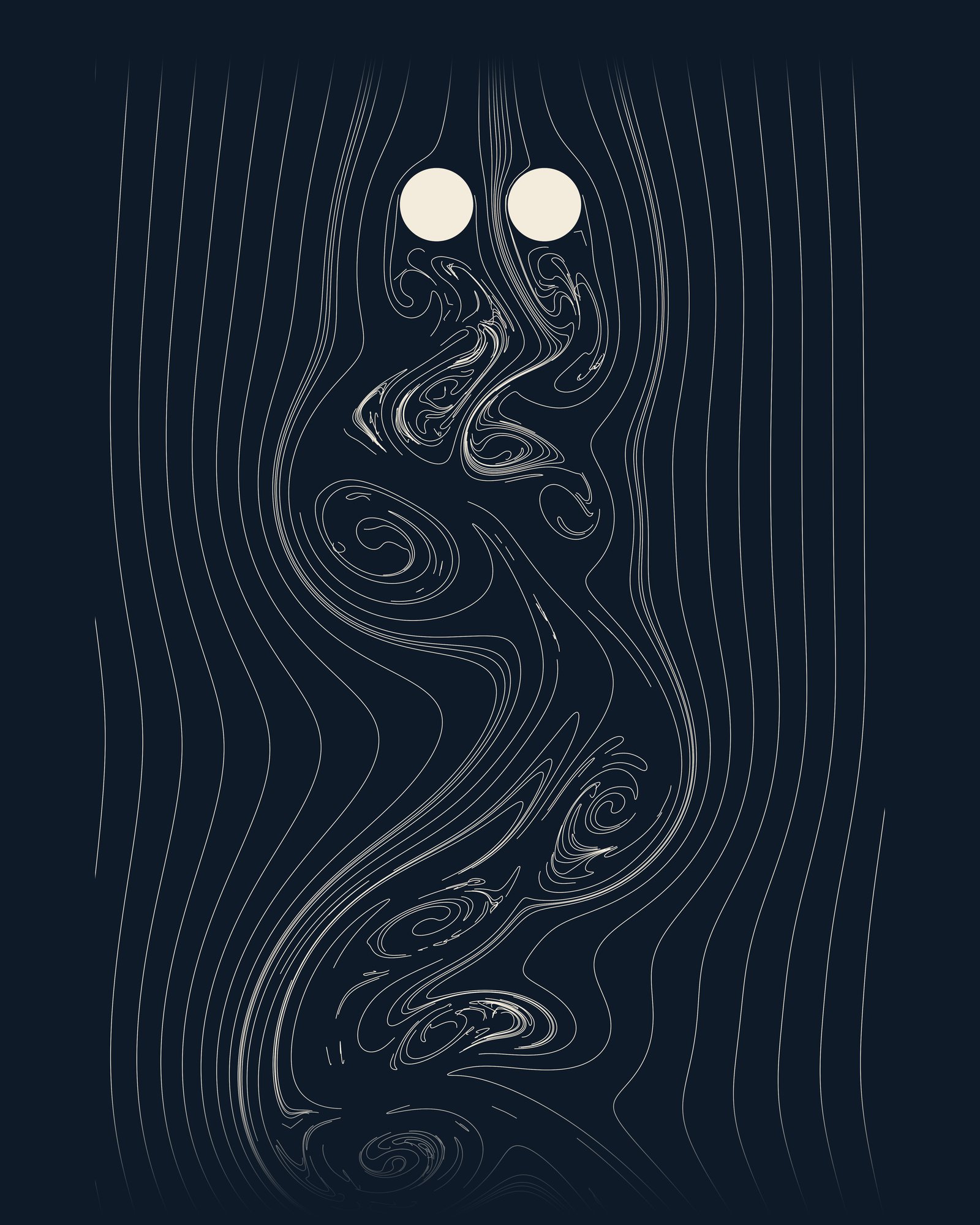
Two cylinders side by side, half their width apart. Each starts its own eddies, but this close the two wakes cannot keep apart, and downstream they become one street.
None of it is rare. The same physics made shapes like these above every snowy roof and behind every reed in a slow stream, and almost no one saw them.